.

Know your spine!

Know your spine

Estimated reading time: 2 minutes

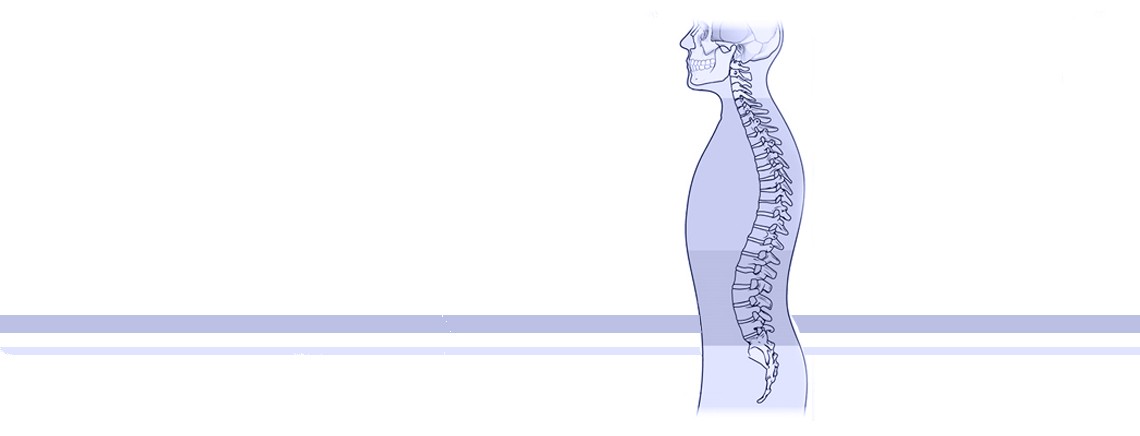
The spine is a spinal column with shape like the letter S that provides the primary support for the body. It allows you to stand upright, bend, and twist while protecting the spinal cord from injury. It is essential to understand the alignment and the movement of your spinal cord so that you can protect it and consistently experience a healthy, painless, and limitless living.

“You are as young as your spine is flexible.” – Joseph Pilates

Spine Structure

The spine has 33 individual bones stacked, one on top of the other, called “vertebrae.”  Bands that stand between the vertebrae protect and connect them.

In fact, these bands are called intervertebral discs, and their function is to separate, cushion, and prevent the robbing of vertebrae.

To clarify, these 33 bones are numbered from top to bottom and divided into sections. The vertebrae in each region have unique features that help them perform their functions.

Spine Sections

The spine divide into :

Cervical – first seven vertebrae ( C1-C7 )
Primary function: to support the head

Certainly, movement of the head is possible due to the anatomy of the atlas (1st vertebrae) and 2nd vertebrae, a peg-shaped axis.

Thoracic – 12 vertebrae (T1-T12)
Primary function: provide support to the rib cage and protect the heart and lungs.

Limited Move

Lumbar – 5 vertebrae (L1-L5)
Primary function: to bear the body weight

Above all, the direction of flexion, extension, and rotation

Sacral – 3 to 5 vertebrae fused
Primary function: to connect the spine to the hips

While they form the pelvic girdle together with the iliac bones

Coccyx – 4 last fused vertebrae
Primary function: to provide attachment for ligaments and muscles of the pelvic floor

The S shape of the spine

The S-shape of the spine exists because of the curves that took place during its development. The primary curves are the kyphotic ones, and the secondary curves are the lordotic ones.

The kyphotic curves are outward curves of the spine – thoracic, sacral

The lordotic curves are inward curves of the spine – cervical, lumbar

There are five types of movement

Firstly, flexion – forward bending

Secondly, extension – backward bending

Thirdly, lateral flexion – side bending

Fourthly, axial rotation – twisting

And last, axial extension – lengthening of the spine

Find out more information about your body here!

Resources

  1. Mayfield Clinic
  2. Human Anatomy – structure and function, first volume / Panagiotis Valtopoulos – Medical Publications P.H. Daskalidis

Continue Your Journey

Explore more insights on consciousness, embodiment, and transformation
Soma Flow Thrive
Privacy Overview

This website uses cookies to provide you with the best possible user experience. Cookie information is stored in your browser and performs functions such as recognising you when you return to our website and helping our team to understand which sections of the website you find most interesting and useful.